
Assisted Living Facilities – are you measuring the health of your residents? Your referrals will want to know this answer. They want to be assured of your expertise in managing the health of their mother, their father, or their customers.
But if you don’t measure your residents’ health, then how can you effectively manage their health? Furthermore, how can you discuss the health management you provide in your AL with your local hospitals, SNFs, or ACOs if you have no specific and meaningful data that you can show them? What impression does that convey?
The noted management consultant, Peter Drucker, said,
- “If you don’t measure it, you can’t manage it.”
And W. E. Deming, a renowned financial consultant, said,
- “In God we trust. Everyone else bring data…”
The assisted living industry increasingly understands that hospitals, ACOs, and SNFs have become more than just coveted referral sources. They are partners in the care continuum of the frail elderly, as all share in the reward as well as the cost of their family member’s and customer’s health management.
And families scrutinize ALs more now, because the significant expenses they experience create high expectations for satisfaction. They need to be assured that the beautiful physical surroundings and advertised amenities are matched by an equal fervor and expertise in health management.
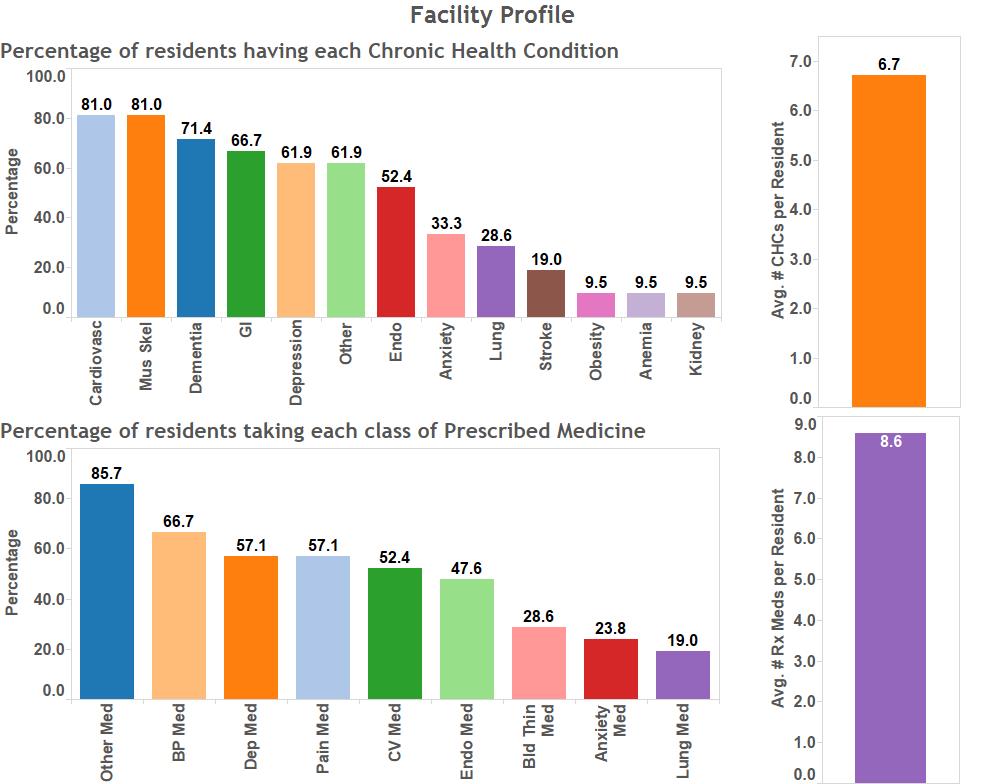
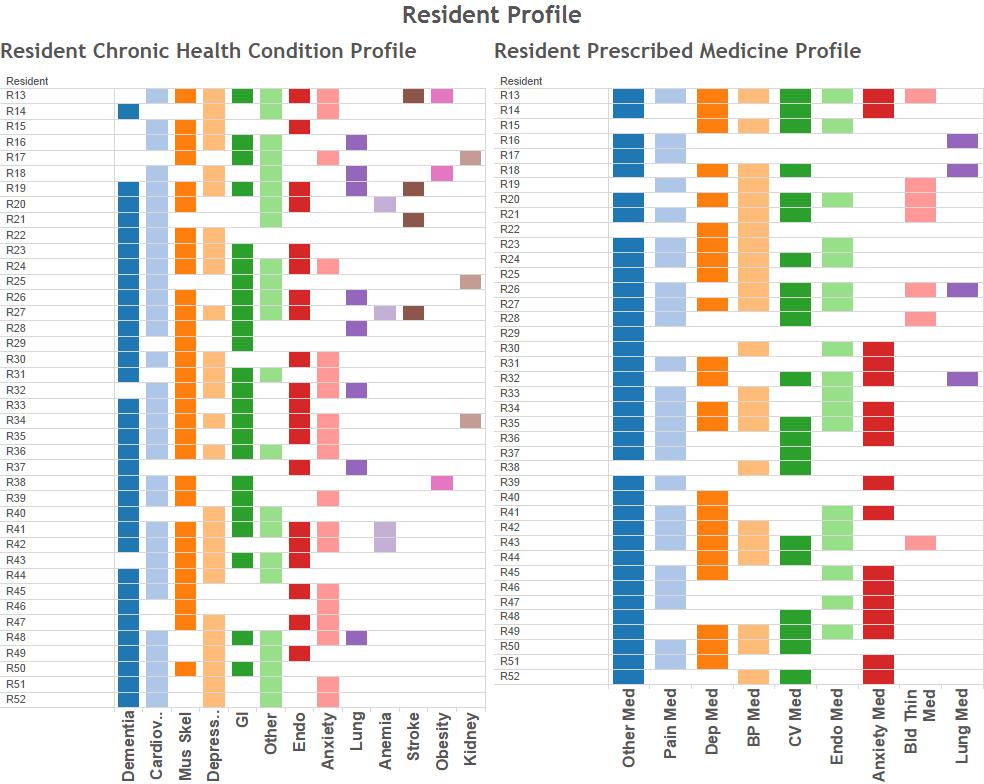
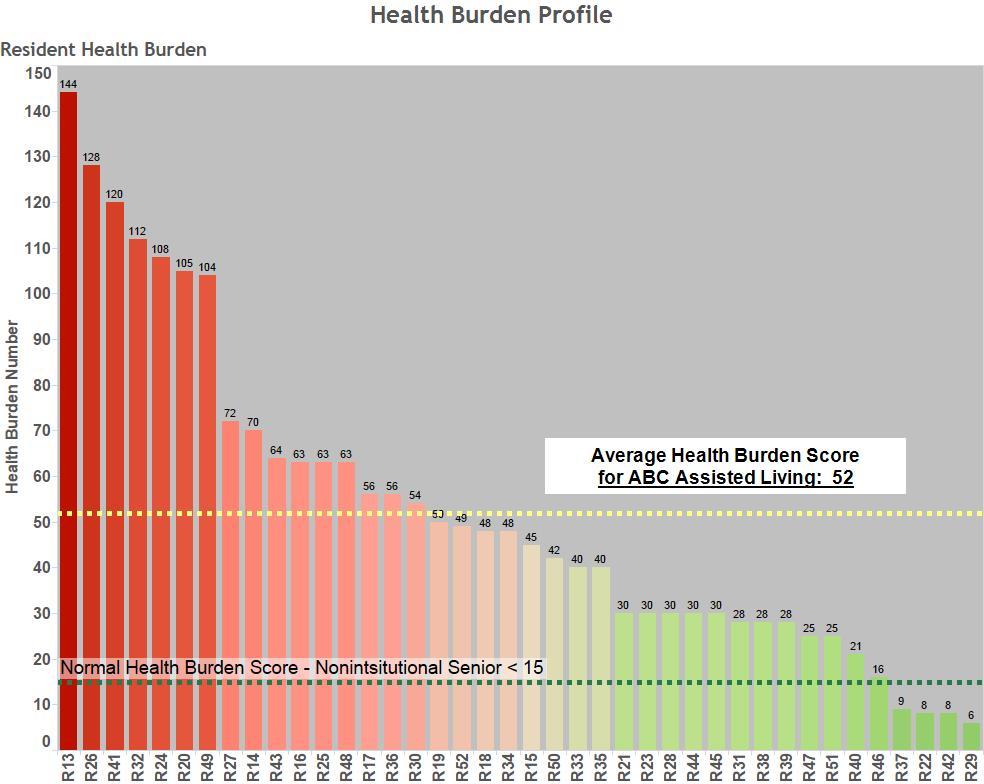
So that brings us back to HEALTH PROFILES. Here are just a few questions that will help guide your focus in managing your residents’ health and promote your expertise to your referral sources. The answers are immediately available, with a single glance, in your AL’s HEALTH PROFILES. But without HEALTH PROFILES, how long would it take you to quickly and accurately dig out this information from your paper charts?
Questions
1. What are the top 5 most common health conditions of the residents in your Facility?
a. What specific programs have you developed that are geared to helping residents with these most common conditions?
2. What percentage of your residents has each of the top ten most common Chronic Health Conditions of the elderly?
a. This answer will help guide where to target employee in-service education. Informed employees will take better care of your residents.
b. If you are part of a larger group of ALs owned by the same family or corporation, how does this profile compare to the profile of your sister ALs?
i. A family of ALs within a corporation may discover that the health needs and services of each AL may differ and would benefit from offering health services and education specific to the needs of an individual AL.
3. What is the average number of Chronic Health Conditions experienced by each of the residents in your AL?
a. This is important to know, because the more Chronic Health Conditions a resident has, the greater the risk of failing health, and the more health support he/she will require.
4. What are the top 5 most common prescribed medicines taken by residents in your AL?
a. Do you offer your medication aids in-service education that focuses on the most common meds that they pass to your residents?
5. Which residents pose the highest risk for failing health and loss to the ER, hospital, or nursing home?
a. Do you offer “risk adjusted monitoring”, where you monitor high-risk residents more frequently and more thoroughly than your lower risk residents?
‘At-a-Glance’ HEALTH PROFILES allows you to answer these questions easily, immediately, with a simple glance. Show them to your referral sources, even your state regulatory agencies, so that everyone will see your sincerity and commitment to providing the best health management possible.
<< Back to Blog Home
Latest Posts